
Byaasgaards Mikrolandbrug
In Byaasgaards Microfarm we grow fruit and vegetables inspired by regenerative methods & experiment with both organic, biodynamic and old varieties
vegetables from micro-farming
Here @lehnertpernille grows fresh unsprayed vegetables according to organic and regenerative principles.
This means that we do everything we can to take good care of our land and the life that lives there. Therefore, we turn and disturb the soil as little as possible, and we make sure to feed the micro-life with organic material throughout the season, and never chemicals.
The entire Byaasgaard has begun converting to Organic Certification on January 1, 2025.
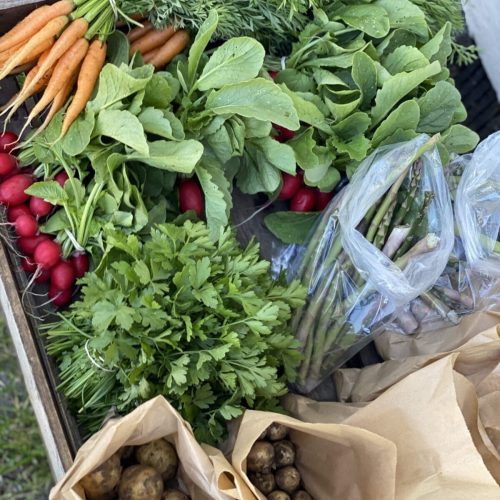
You are very welcome to take a walk through the field, you can smell, feel, look and ask us about big and small things - The current items can be purchased here in The Farm Shop eller smages i Gårdbutikken.
Follow Pernille's daily life on Insta Here: @byaasgaard.mikrolandbrug
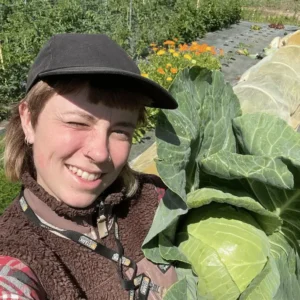
We have over 20 different varieties in the field and we experiment with both organic, biodynamic and old varieties.

We keep the ground covered - right now with plastic sheeting - to avoid erosion and drying out. At the same time, it helps us keep weeds down. In the long term, we must cover the ground with organic material, e.g. compost, grass clippings and the like.
At the same time, of course, we grow a lot of delicious food for people.
Questions for vegetables and micro-farming
Write to Pernille via the contact form here: Contact
What is Regenerative Agriculture?
Regenerative Agriculture covers cultivation methods in agriculture, the purpose of which is to cultivate the soil more sustainable and gently, so that it is not exhausted, so that you create fertile and healthy soil - it is also about adding value and improving the area.
Some of the principles of the cultivation method:
The soil must be fed: Compost from plant residues and animal manure must provide natural nutrients to the soil, while avoiding artificial fertilizers.
The soil should be covered as much as possible: The soil should be kept covered year-round by using catch crops or winter crops in the fields.
The soil should not be disturbed: Ploughing and other processing by heavy machinery as well as chemical disturbance from, for example, pesticides or chemical fertilizers should be avoided.